Next week, UN Member States and other stakeholders will convene in Geneva, Switzerland for the Eleventh Conference of States Parties (CSP11) to the Arms Trade Treaty (ATT). Scheduled for 25–29 August, CSP11 comes at a time when responsible arms regulation is essential to protect the 2 billion people living in a conflict zone.
The conference provides an opportunity to take stock of achievements and challenges to date and to develop strategies for the future. In this context, ATT States Parties will assess progress in implementing the Treaty, share challenges, and consider new measures to strengthen the ATT’s long-term impact. In practice, this means reviewing recommendations from the ATT Working Groups, adopting decisions on substantive proposals, and setting the course for the Treaty’s future direction.
Against a backdrop of intensifying armed conflicts and deepening humanitarian crises – from the devastating conflicts in Gaza, Myanmar, and Sudan to protracted violence in Yemen, Ukraine and the Democratic Republic of Congo (DRC) – this meeting is a chance for States to demonstrate renewed commitment to the ATT’s humanitarian objective: to stop irresponsible arms transfers and reduce human suffering. The decisions made at CSP11 will not only impact the Treaty implementation and credibility, but can potentially carry real consequences for individuals and communities affected by conflict and armed violence.
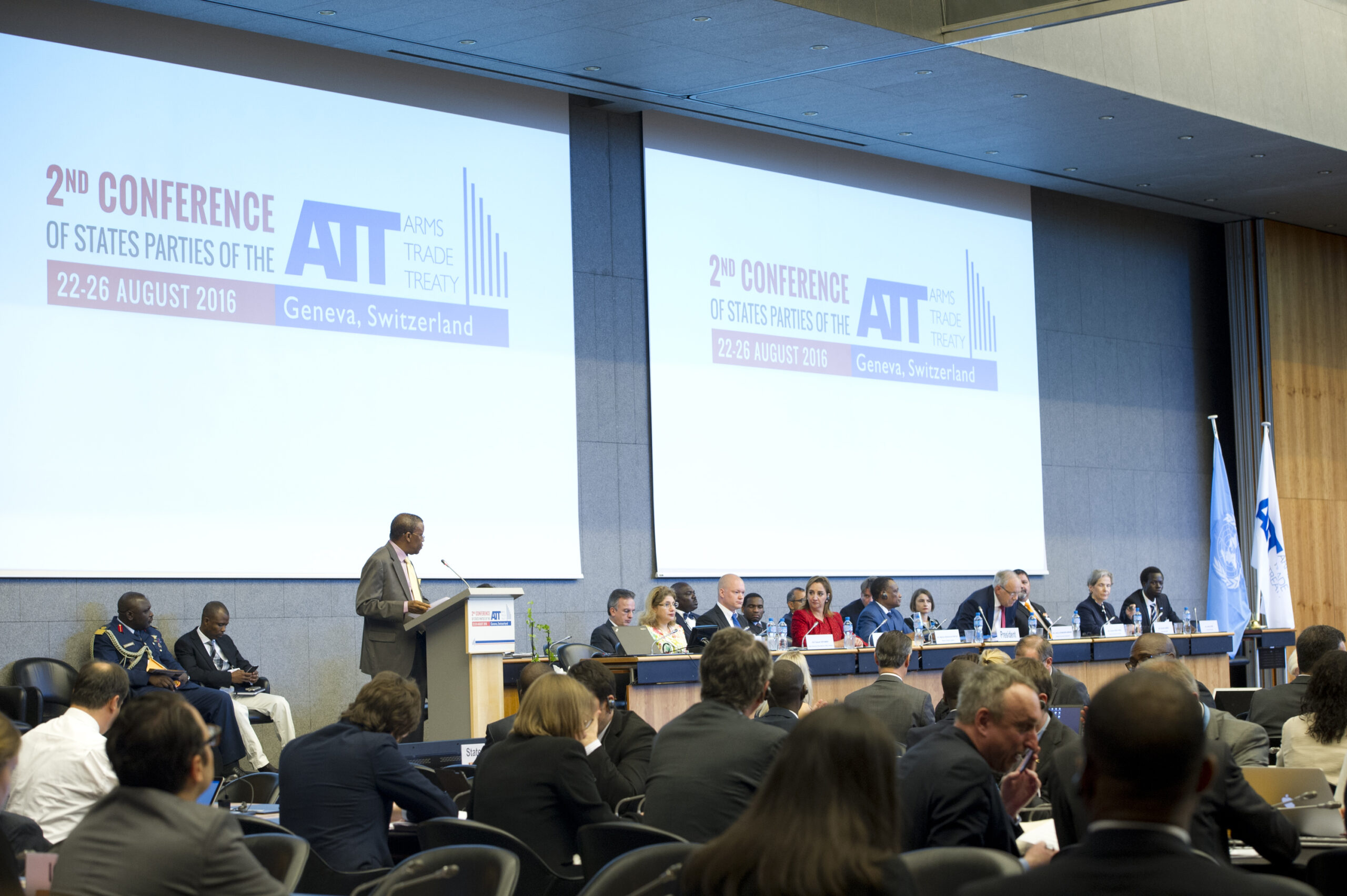
Delegates attending the second Conference of States Parties to the Arms Trade Treaty in August 2016 in Geneva, Switzerland.
CSP11: What are the key issues on the table next week?
The President of CSP11 (Ambassador Carlos Foradori of Argentina) has made “Universalization as a Priority” the thematic focus of this conference. While 116 States have now ratified the Treaty, ATT membership remains uneven, particularly in the Asia Pacific and Middle East regions. To address universalization gaps, the President’s working paper puts forward a set of recommendations including encouraging States Parties (and the ATT Secretariat) to integrate ATT universalization into bilateral and regional meetings, to share best practices with signatories and other non-state parties, and to strengthen the strategic partnership with the Inter-Parliamentary Union. It also recommends a stronger emphasis on public outreach – launching awareness campaigns that highlight the ATT’s humanitarian impact, promoting engagement with other stakeholders including industry, academia, media, and civil society; encouraging participation of youth in the ATT and identifying Goodwill Ambassadors or Champions for the ATT.
CSP11’s agenda will then focus on the work of the ATT Working Groups and the recommendations they put forward for endorsement:
- The Working Group on Treaty Universalization (WGTU) underscored the urgency of expanding ATT membership, stressing that universal participation is critical to closing persistent gaps in the global arms trade. The Co-Chairs recommended that States Parties assume the role of regional universalization champions and systematically include other regional universalization champions, regional organizations, and other regional actors in their outreach efforts. They also encourage States to share experiences by presenting on their own processes for ratification, accession, and domestication, offering practical guidance to non-States Parties.

Mwachofi Singo, Deputy Director of Security Research and Information Centre (SRIC) in Kenya, delivering a statement on behalf of the Control Arms delegation under the WGETI agenda item at the Third Conference of States Parties to the ATT.
2. The Working Group on Effective Treaty Implementation (WGETI) completed the first year of its new Sub-working Group on Exchange of National Implementation Practices and its multi-year workplan, with discussions centered on practical aspects of ATT implementation. Discussions covered the role of industry in applying human rights and IHL due diligence, the risk of conventional arms being used for gender-based violence (GBV) and violence against women and children, and proposals for ad hoc discussions on current conflicts and relevant international rulings. Building on these exchanges, WGETI recommends continuing structured discussions on national practices such as import systems, control lists, and brokering, while also tackling challenges related to parts, components, and emerging technologies. WGETI further proposes continuing discussions on the development of voluntary guidance to
link industry due diligence with States Parties’ responsibilities under the ATT and to encourage the engagement of industry actors in ATT discussions. A central recommendation is the draft decision to establish Gender Focal Points (GFPs), voluntary positions that would help States mainstream gender considerations, strengthen GBV risk assessments, and promote the participation of women in ATT implementation. Another key decision which can impact the credibility of the ATT as a forum is related to the continuation of ad-hoc discussions on topics raised by States Parties and other stakeholders.
3. The Working Group on Transparency and Reporting (WGTR) emphasized the need to improve compliance with reporting obligations, noting that only around 60% of States Parties are currently submitting timely and complete reports. The WGTR recommended that States Parties submit all outstanding reports to the ATT Secretariat or seek assistance in this regard. States that have adopted new ATT implementation measures since submitting their initial reports are urged to provide updated reports, and the Secretariat is encouraged to make these updates more visible on its website. The WGTR also invited States and other stakeholders to give presentations at the next meeting on the theme of “Reports to Cabinet and/or Parliament.” In addition, States were encouraged to act as “reporting champions” and submit specific assistance offers to the Matching Database. Finally, the WGTR requested that a future session hold an in‑depth discussion on sources and methodologies for data collection, as well as decision-making on substantive reporting issues.
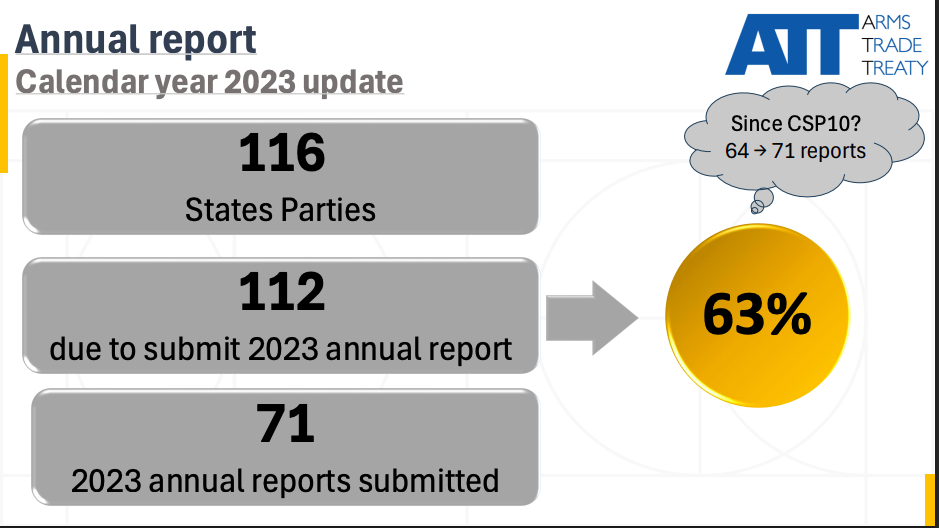
Slide from presentation on “Arms Trade Treaty Status of Reporting” provided by Tom NIJS of the ATT Secretariat during the February 2025 meeting of WGTR.

CSP11’s agenda will also include consideration of a proposal from the United Kingdom to agree on a mandate to elaborate a five-year strategy for the Arms Trade Treaty by CSP12. Currently, the ATT lacks a comprehensive multi-year strategy, resulting in ad-hoc progress and inconsistent focus from year to year. The proposal calls for the ATT Secretariat to collect inputs from States Parties and stakeholders on objectives and benchmarks, and with support from the “ATT Bureau” (comprising the President, Vice-Presidents, committee chairs, and others) to compile a draft strategy by 2026. The strategic roadmap would set clear goals and performance indicators to measure progress against priorities, to identify key opportunities and challenges facing the Treaty, assess available and needed resources, and provide guidance for prioritizing future activities.
4. CSP11 will also consider the findings of the Management Committee’s review of the revised ATT Programme of Work, tested over the past year. The revised format, which introduced one four-day Working Group session and one two-day Informal Preparatory Meeting held separately, was found to improve the quality of discussions and better prepared delegations for the Conference itself. Based on this, the Management Committee recommends continuing with the revised format. The Committee also included recommendations to improve cost-effectiveness and participation, including exploring remote interpretation, using smaller venues, strengthening the circulation of documents in advance, and aligning future thematic priorities with Working Group agendas. The next review will be conducted at CSP13.
Broader Implications and Expectations
The Arms Trade Treaty was adopted to reduce human suffering caused by illicit and irresponsible arms transfers. The conflicts in Gaza, Yemen, Myanmar, Ukraine, Sudan and the Democratic Republic of Congo illustrate the devastating consequences of poorly regulated conventional arms transfers and underscore that the Treaty’s humanitarian objectives remain as urgent as ever.
The agenda before the CSP11 includes important steps to improve the Treaty’s functioning – from strengthening reporting and transparency, to advancing universalization, to agreeing on a five-year strategy. These are valuable initiatives, but they are largely procedural.

What is missing is an open and substantive discussion about how States are applying the Treaty’s provisions in their transfer decisions. Are States rigorously assessing the risks that exported arms could be used to commit violations of international humanitarian or human rights law? And if they are, on what basis are they approving arms transfers to states that are parties to ongoing conflicts? How are they evaluating diversion risks? And crucially, how are these decisions shaping the reality for civilians living under fire?
As the ATT enters its second decade, CSP11 offers a critical opportunity for States Parties to move beyond process and focus on impact. Ensuring compliance with the Treaty’s core obligations – to assess the risk of conventional arms transfer – is the only way to ensure that the ATT delivers on its promise: to reduce human suffering caused by conflict and armed violence.
The post Advancing ATT Implementation: Key Issues and Expectations for CSP11 first appeared on Control Arms.
]]>The post Ammunition Controls: Outcomes of the June 2025 Global Framework Meeting first appeared on Control Arms.
]]>Background: A New Global Framework for Ammunition
While diverted ammunition fueled conflict, crime, and terrorism, and as accidental explosions at ammunition depots claimed thousands of lives worldwide, ammunition control remained a glaring gap in international arms controls. The adoption by the UN General Assembly of the Global Framework for Through-life Conventional Ammunition Management (GFA) – a set of political commitments which aim to improve the safe, secure, and accountable management of ammunition worldwide – has finally closed this long-standing policy gap.
This new framework has emerged after years of debate, as ammunition has long been excluded from earlier instruments such as the UN Programme of Action on Small Arms. That gap led the UN General Assembly to launch a special process in 2021 to develop a new set of political commitments focused on through-life ammunition management.
The GFA, whice covhers all types of conventional ammunition, contains 15 objectives and 85 measures which seek to address the full “through-life” span of ammunition, from production and stockpiling through transfer, use, and disposal. It comprehensively tackles both safety (preventing deadly unplanned explosions in depots) and security (preventing diversion of ammunition to illicit markets), with the goal of saving lives and enhancing global peace and security.
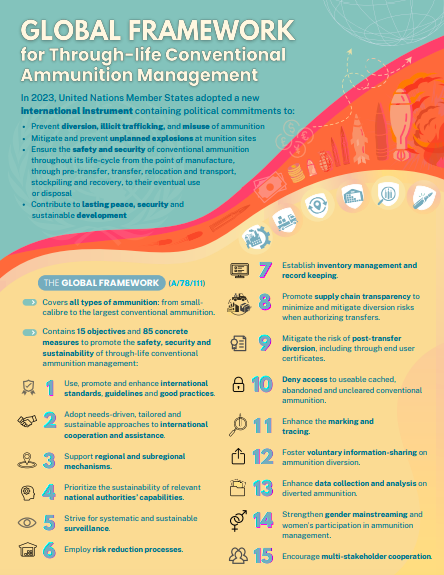
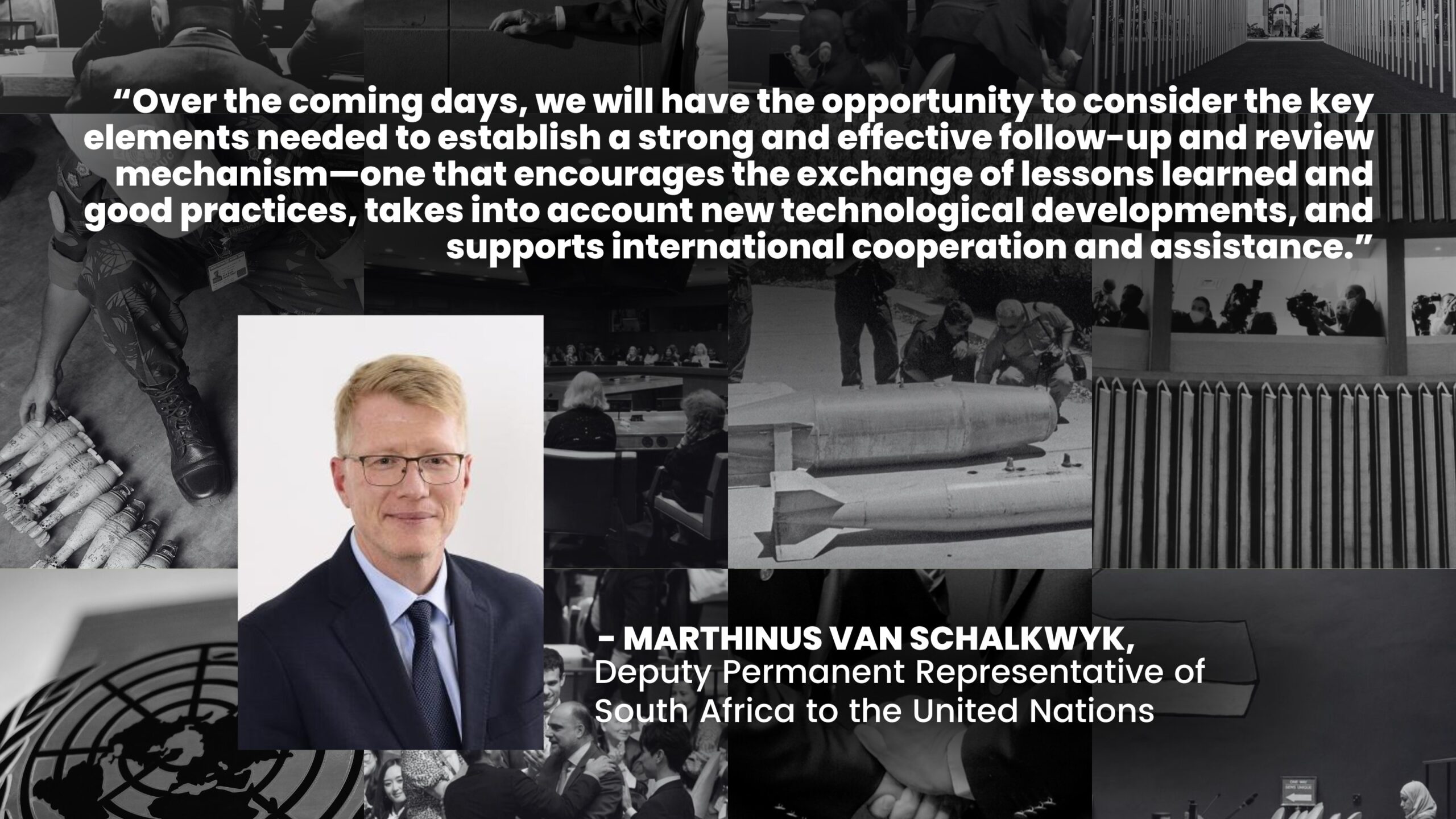
Photo Credit: UNODA
The June 2025 Preparatory Meeting and Its Focus
A month ago, delegates and representatives of international organizations and civil society gathered at the United Nations in New York for the first Preparatory Meeting of States on the GFA. The broad participation in this inaugural meeting underscored the global support and momentum behind the initiative.
“We are fortunate to be supported by a wide range of actors… Their expertise and partnership are vital in advancing the Framework,” noted Ambassador Marthinus van Schalkwyk of South Africa, the Chair of the preparatory meeting.
The primary goal of this meeting was to lay the groundwork for the GFA’s implementation and the inaugural Meeting of States planned for 2027. As such, much of the agenda was dedicated to procedural and organizational matters – agreeing on how future meetings will function, how countries will report on their progress, and how to involve various stakeholders.
Notably, States agreed on a periodic review mechanism: they recommended holding a high-level Meeting of States every six years to review implementation of the GFA, with the first such meeting set for 2027. To ensure continuous momentum in between these major conferences, the 2025 Preparatory Meeting also proposed convening two technical expert meetings in the intersessional period after 2027 (each five days long) to delve into practical themes such as stockpile safety, marking and tracing technologies, and ammunition disposal methods.
,States also endorsed a voluntary national reporting template which will be used to share implementation progress, challenges, and needs under each of the GFA’s objectives. States are encouraged to submit an initial baseline report in 2026 – outlining steps they have taken so far to implement the GFA measures – which will form the basis for the discussions at the 2027 review meeting. Afterwards, GFA reports—submitted on a voluntary basis—will follow a biennial reporting cycle.
Participants also discussed substantive issues such as international cooperation and assistance for ammunition management, and they highlighted cross-cutting themes, for example, the need to integrate a gender perspective in implementing the GFA. Notably, several delegations and civil society speakers stressed the importance of women’s full, equal, and meaningful participation in ammunition management efforts, aligning with the GFA’s gender-mainstreaming objective.
Synergies with the Arms Trade Treaty
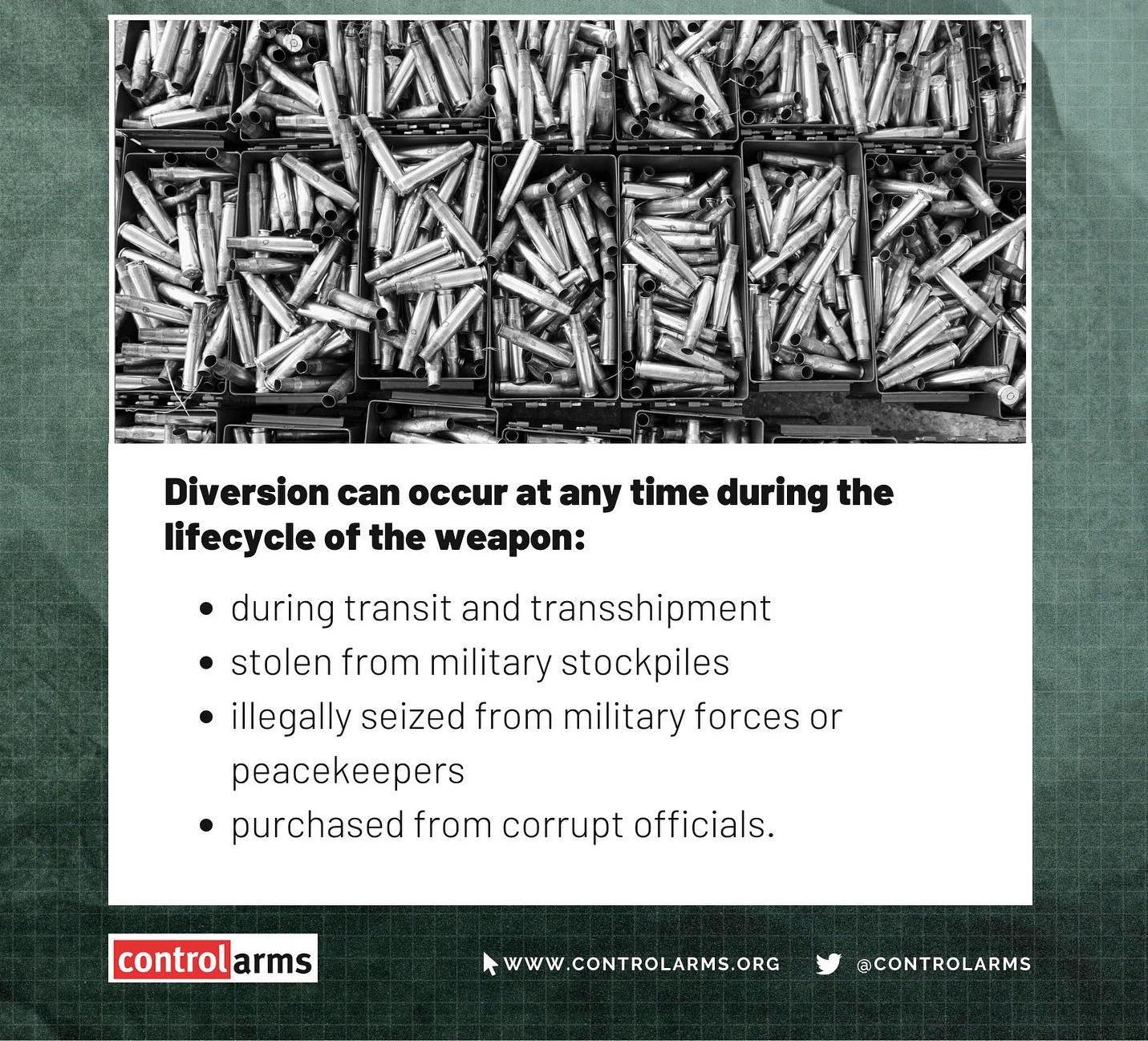
With shared objectives and complementary provisions, the implementation of the GFA is also expected to strengthen the implementation of the Arms Trade Treaty (ATT). While the GFA sets out a range of political commitments, the ATT is a legally binding treaty that regulates the international trade in conventional arms and includes explicit provisions on ammunition transfers. As set out in Article 3, the ATT’s prohibitions under Article 6 and export risk assessments under Article 7 apply to ammunition. In addition, States Parties are required to establish and maintain a national control system to regulate the export of ammunition or munitions fired, launched, or delivered by any of the covered weapons. However, ammunition is notably absent from Article 11 of the ATT, which addresses the prevention of diversion. Similarly, the ATT’s provisions on weapons management from a safety perspective are not as detailed or robust as those found in other conventional arms control frameworks.
The Global Framework addresses these gaps by taking a more comprehensive, “through lifecycle approach” to ammunition controls. It outlines specific measures to improve supply chain transparency and end-user controls (Objectives 8 and 9) to mitigate diversion risks, and it provides guidance on safe stockpiling, inventory management, and disposal of surplus or obsolete ammunition to reduce the risk of accidents or misuse.
As preparations for the Eleventh Conference of States Parties to the ATT (25–29 August in Geneva, Switzerland) begin, the Global Framework offers a new reference point for States seeking to strengthen national control systems and improve diversion prevention measures. In this context, the ATT Voluntary Trust Fund can serve as a practical mechanism to support activities that align with the Framework’s objectives, promoting greater coherence across conventional arms control instruments.
The post Ammunition Controls: Outcomes of the June 2025 Global Framework Meeting first appeared on Control Arms.
]]>The post Marking 10 Years Of The ATT: Successes And Challenges first appeared on Control Arms.
]]>Progress and challenges
Reflecting on a Decade of the Arms Trade Treaty
24 December2024 marks a decade since the ATT entered into force—a milestone in global efforts to bring transparency and accountability to the conventional arms trade.
On December 24, 2024, we will commemorate the 10th anniversary of the Arms Trade Treaty (ATT), a groundbreaking legal instrument that established international standards for regulating conventional arms transfers with the explicit goal of reducing human suffering. This historic milestone is a testament to the tireless efforts of campaigners, governments, and civil society to bring transparency and accountability to the global arms trade. Over the past decade, the ATT has made significant strides, yet it continues to face challenges that require renewed commitment from the international community.
Achievements Over the Decade
Since its entry into force, the ATT has seen significant progress in universalization and implementation.
With 116 States Parties and 26 signatories, the Treaty has gained broad support across all regions of the world. ATT States Parties have undertaken measures to align their national legislation with the Treaty’s provisions, enhancing the regulation of international arms transfers and promoting transparency. For example, some ATT States Parties have established comprehensive national control systems regulating the export, import, transit, and brokering of conventional arms, in compliance with Treaty obligations. Others have implemented export control laws and designated competent national authorities to oversee arms transfers. Additionally, States Parties have adopted national control lists, established mechanisms for end-user certification to prevent the diversion of arms, and strengthened their arms export licensing processes to include comprehensive risk assessments.
These efforts exemplify the ATT community’s commitment to responsible arms trade and the effective implementation of the Treaty’s provisions.

Ongoing Challenges
Despite the Arms Trade Treaty (ATT) establishing international standards to regulate arms transfers and reduce human suffering, significant challenges persist. A considerable number of major arms-producing states remain outside the treaty. Reporting compliance has been inconsistent, and some ATT States Parties have not fully adhered to its provisions, undermining its effectiveness. Over the past decade, weapons and munitions have continued to flow into brutal armed conflicts and situations of repression. Notably, some ATT States Parties have approved arms transfers into contexts where serious violations of international law have been documented, including Myanmar, the Occupied Palestinian Territories, Sudan, and Yemen.
Control Arms calls for all States Parties to fully adhere to the ATT’s provisions and for the international community to strengthen mechanisms ensuring compliance, thereby upholding the Treaty’s fundamental goal of reducing human suffering.
Looking Forward
As we enter the second decade of the ATT, it is crucial to address these challenges. Enhancing transparency, strengthening accountability mechanisms, and encouraging universalization of the ATT are essential steps toward realizing the treaty’s full potential. The international community must renew its commitment to the ATT’s objectives to ensure it effectively contributes to reducing human suffering and promoting global peace and security.
On this milestone, Control Arms reaffirms its commitment to advocating for robust implementation of the ATT and calls on all States to intensify their efforts to uphold the ATT’s object and purpose: to reduce human suffering. It also urges states to join the Treaty if they have not yet done so, and to ensure its robust and meaningful implementation. By working together, we can continue to transform the global arms trade and make the vision of the ATT a reality: a safer world with less human suffering.
As we reflect on a decade of progress, we look forward to building on prior achievements and addressing ongoing challenges in the years to come.

Other Resources

Warpod: Ten years of the Arms Trade Treaty
Saferworld
🎙️ Reflect on a decade of the Arms Trade Treaty with Saferworld’s latest Warpod episode. Join experts Roy Isbister and Elizabeth Kirkham as they discuss the ATT’s successes, challenges, and future prospects.

Reflections on the Arms Trade Treaty at 10
Rachel Stohl, Stimson
Discover key insights into the successes, challenges, and future priorities of the Arms Trade Treaty as it marks its 10th anniversary in this reflective piece by the Stimson Center
ATT Milestones
Key Arms Trade Treaty Milestones in the last decade.
2013
Adoption of the Arms Trade Treaty
On 2 April 2013, the Arms Trade Treaty was adopted by a vote of 154 in favour, 3 against, and 23 abstentions. It opened for signature on June 3rd, 2013! This marked a historic step towards regulating the international arms trade.
On 3 June 2013, the ATT opened for signatures. Sixty-seven countries sign the treaty on the opening day.

2014

Entry into Force
On 24 September 2014, only a year and a half after it opened for signatures, the ATT reached the 50 required ratifications and triggered the treaty’s entry into force, thus becoming the fastest growing UN treaty.
2015
First Conference of States Parties and Entry into Force
On 24 – 27 August 2015, the First Conference of States Parties (CSP1) was held in Cancun, Mexico and was presided over by Ambassador Jorge Lomónaco of Mexico.
On24 December 2015, the Arms Trade Treaty entered into force with 61 ratifications and 130 signatures.

2019

100 States Parties
On 14 December 2019, The Treaty reaches 100 States Parties, following Mozambique’s ratification.
2024
10th Conference of States Parties
On 19 – 23 August 2024, the Tenth Conference of States Parties (CSP10) of the Arms Trade Treaty (ATT) was held in Geneva, Switzerland and was presided over by Ambassador Razvan Rusu of Romania.

The post Marking 10 Years Of The ATT: Successes And Challenges first appeared on Control Arms.
]]>Latin American Regional Workshop: Increasing effective implementation of the Arms Trade Treaty through practical understanding of gender-based violence and violence against children criteria
6-8 February 2024 – Ministry of Foreign Affairs, Mexico City
The overall goal of the project was to provide accessible guidance to licensing officials and civil society on how to conduct GBV risk assessments consistent with the commitments set out in the ATT. Although originally planned as a workshop focused solely on the relationship of GBV and ATT risk assessment, Control Arms’ How to Use the Arms Trade Treaty to Address Violence Against Children: A practical guide for risk assessment was also incorporated as part of the curriculum and discussions given the incidence of firearms on violence against adolescents and the role of arms in the recruitment of children in the Latin American region.
The regional workshop included participants from six Latin American countries, which are at different stages of implementing the Treaty or seeking to accede to it. Participants included government officials from Argentina, Brazil, Chile, Colombia, Mexico and Panama. To facilitate exchanges on best practices and effectively address challenges in identifying and documenting cases of GBV and violence against children (VAC), a diverse group of stakeholders (including civil society) was convened along with experts from the International Committee of the Red Cross (ICRC), UNICEF, and the Center of Excellence-UNODC.
Through hypothetical and interactive exercises as well as group discussions, participants applied the lessons learned during the training, shared national perspectives, best practices and challenges.
This project was made possible with financial assistance from the UN Trust Facility Supporting Cooperation on Arms Regulation (UNSCAR) and with support from the Mexican Ministry of Foreign Affairs.
Course Pack and Agenda
Final Summary Report

The post ATT GBV Training Mexico first appeared on Control Arms.
]]>The post ATT Regional Actors Handbook first appeared on Control Arms.
]]>The Regional Actors project – which was initiated with the generous support of Germany – takes stock of the work of Regional Organizations to better understand how they contribute to ATT promotion, universalization, and implementation efforts and to identify opportunities for further engagement of Regional Organizations in supporting the ATT.
It is intended as a guide for ATT States Parties to better understand what type of ATT assistance is available within their respective regions. As such the handbook gives a snapshot of the diversity of instruments, policies, tools and activities developed and undertaken in this area by a variety of regional bodies, with a specific focus on the ATT.
It also highlights several areas in which the Regional Organization experience can provide guidance and lessons learned for ATT stakeholders.
Part I – Profiles of Regional Organizations
Using the Small Arms Survey Handbook on “Regional Organizations and the UN Programme of Action on Small Arms (PoA)” as a model, the first part of the ATT Regional Actors Handbook showcases the profiles of 27 regional organizations. These organizations were selected for inclusion in the Handbook based on their engagement with the ATT or related instruments and programs.
Each profile is comprised of two sections:
1. Organization Description
Where applicable, the profiles also include information on regional instruments which share linkages or complementarities with the ATT. This analysis seeks to foster a better understanding of the key synergies and complementarities between the ATT and these instruments, in order to better illustrate the relevance of the broad range of activities and efforts by Regional Organizations to the universalization and implementation of the ATT.
2. Account of ATT-related activities
In this section, the research team looked at 2 key areas: 1) ATT Support and 2) Establishing Transfer Controls.
Given the broad range of assistance covered in this subsection, activities are organized in four types of initiatives 1) National Control System, 2) Legal Assistance, 3) Diversion Prevention and 4) Gender and GBV.
Part II – Key Findings and Recommendations
This section provides a set of general findings and specific recommendations for Regional Organizations, for ATT States Parties and other stakeholders. In particular, the recommendations highlight opportunities through which Regional Organizations could further their engagement in the ATT as well as ways in which member states can partner with Regional Organizations on ATT-related projects.
Annexes
The Handbook also includes three Annexes:
- Annex I provides a snapshot of the information provided in the Regional Organization profiles
- Annex II offers a survey of regional instruments and agreements included in the profiles outlined in Part I with a particular focus on their scope and reporting requirements.

LAUNCH EVENT:
Exploring the Critical Role of Regional Actors in ATT Universalization and Implementation
The post ATT Regional Actors Handbook first appeared on Control Arms.
]]>The post Gender, Conventional Weapons and the Arms Trade Treaty – A 2022 Review first appeared on Control Arms.
]]>A side event organized byControl Arms, Small Arms Survey, UNIDIR and WILPF
the Eighth Conference of States Parties to the ATT


This event provided the opportunity for a wide range of actors from the United Nations to civil society to discuss how they were taking forward the Arms Trade Treaty’s (ATT) obligations and commitments on gender. Ms. Hana Salama, Researcher – UNIDIR, who moderated the discussions, briefly presented the recent publication ‘Gender & the ATT Factsheet’, prepared by UNIDIR and Control Arms, which examines gender across all areas of the ATT. Ms. Salama recalled that under the ATT, gender is not only about gender-based violence (GBV), but is also key to other Treaty provisions, including on the prevention of diversion.
Ms. Vera Kissling, Deputy Head of Export Control and Private Security Services, Division of Security Policy (Department of Foreign Affairs, Switzerland) explained that promotion of gender equality is at the core of Switzerland’s disarmament and non-proliferation policy. This goal will be built on during Switzerland’s membership of the UN Security Council from 2023 to 2024. Ms. Kissling called for enhanced dialogue between government officials, licensing officers in particular, and the civil society on how to implement the Article 7.4 provisions related to GBV.
Ms. Cindy Ebbs, Co-Director at Control Arms, gave an overview of the Control Arms ‘ATT Gender Action Plan’ Project. Acknowledging that the ATT is a critical contribution to global efforts to address GBV, Ms. Ebbs stressed that the ATT represents a significant achievement toward broader UN efforts to mainstream gender issues in global policy and practice. In particular, Ms. Ebbs pointed out that the decisions taken at the Fifth Conference of States Parties (CSP5) to the ATT represented a key step forward and raised the profile of gender and GBV within the context of the ATT. These revolved around three areas:
- Gender-balanced representation in ATT-related decision-making processes;
- Gendered impact of armed violence in the context of the ATT; and
- Implementation of GBV-related risk assessment.
Following up on CSP5, Control Arms has now completed the first phase of its ‘ATT Gender Action Plan’ project. The project explores how gender can be mainstreamed into ATT practice in a more holistic way and through an actionable, effective, and results-based plan, and sets the stage for the CSP5 commitments to take root in the fabric of the CSP for years to come, and for further discussions exploring interlinkages between the ATT and GBV

Ms. Ebbs presented the key project components, which are:
- a collective methodology to monitor progress towards the implementation of CSP5 decisions and recommendations. The methodology provides a comprehensive view of how gender and GBV should be factored into the ATT and related processes.
- an ATT stakeholder survey; and case studies containing examples of positive action. The survey is intended for State Parties and responses will provide valuable information on the implementation of CSP5 gender and GBV related commitments that may not be publicly available. In this regard, the survey is expected to fill existing gaps in knowledge, information sharing, and reporting. The methodology is useful not only for State Parties, but also for signatories to become ATT ‘gender champions’ (and this may faciliate implementation of other Treaty obligations once they become State Parties).
- short case studies on States Parties that demonstrate exceptional work in the gender and GBV areas. In the context of the ATT, highlighting these positive examples can serve as guidance, especially for States that are at different stages with regard to the implementation of gender and GBV commitments and more broadly to their gender evolution.
By developing a solid tool to measure and record progress made on gender and GBV on an annual basis, Control Arms seeks to sustain momentum, to encourage further discussions on the topics of gender and GBV, and to ensure that these issues remain at the forefront of ATT work.
Ms. Mimidou Achakpa, Women’s Right to Education Programme, presented initiatives undertaken to prevent and address the gendered impact of armed violence in Nigeria. After explaining the nexus between insurgency, violence, and gender issues, which is key to understanding and mitigating the effects of conflicts, Ms. Achakpa presented Nigeria’s work to operationalize UNSCR 1325 and the relevant National Action Plan, which is currently being reviewed. Initiatives include the establishment of a Gender Advisor in the Nigeria Police Force, the introduction of gender sensitive programming, and a Guide on Nigerian legislature’s role in advancing the WPS Resolutions, which provides direction in passing gender bills into law.

Ms. Folade Mutota, Executive Director and one of the three founders of the Women’s Institute for Alternative Development (WINAD), spoke about initiatives undertaken in the area of violence reduction at the community level, and the social and gender impact of legislation to control the use of illicit firearms.

Ms Mutota noted that WINAD’s research, A Pilot Study on the Role of Women in Communities: The Case of East Port of Spain is the first and only inquiry into the role of women in reducing, facilitating or preventing armed violence in Trinidad and Tobago and set out to prioritize women’s leadership roles and women’s well-being in violent spaces and understand how women experience violence. WINAD was particularly interested in the transactional nature of the women’s relationships with stakeholders, police and gangs, and found a fairly evolved understanding of the impact of extrinsic motivation and contingent reward.
Ms Mutota underlined that understanding and positioning women’s leadership role in communities requires engagement with the intersecting forms of inequalities and discrimination that are common to women’s lived experience and the masculinized norms related to security which characterize leadership in underserved communities, and situations of conflict.
Ms. Natasa Loizou, Executive Director of the National Controlled Materials Agency of Argentina, explained the role and functions of the newly established Agency. Ms. Loizou spoke about how progress had been made in the area of gender and GBV, which included the adoption of national regulations addressing national programming related to sexual education; the introduction of a legal concept of femicide; creation of a national Ministry of Women, Gender and Diversity; and introduction of an inter-ministerial program with the objective of adopting a comprehensive approach to extreme violence motivated by reasons concerning gender.
Ms. Loizou also presented figures from the national registry of femicides, showing that around 25 per cent of femicides are committed with firearms. Ms. Loizou stressed the importance of gathering such gender disaggregated data at the national level.

Mr. Callum Watson, Gender Coordinator at the Small Arms Survey, introduced the Small Arms Survey’s Global Violent Deaths (GVD) database, presenting some figures and trends in violence perpetrated with firearms against women. Mr. Watson also referred to the Small Arms Survey’s Briefing Paper titled, At Whose Risk? Understanding States Parties’ Implementation of Arms Trade Treaty Gender-based Violence Provisions.
One of the main findings of the paper is that no State Party has publicly indicated nor reported denial of transfers based on GBV criteria. Mr. Watson underlined that it is crucial to encourage states to provide details on cases of denial. Mr. Watson also highlighted that it is paramount to empower civil society organizations to contribute to research agendas on gender and GBV topics; to provide capacity building for data collection, analysis, and reporting; and to foster joint processes between the WPS agenda and the ATT.
The post Gender, Conventional Weapons and the Arms Trade Treaty – A 2022 Review first appeared on Control Arms.
]]>The post NEW RELEASE: ATT Gender Action Plan Project first appeared on Control Arms.
]]>
The primary goal of the methodology and the survey, which were launched at CPS8, is to have some accountability and ways to measure how States and other stakeholders are doing in terms of implementing CSP5 decisions and recommendations.
The methodology provides a comprehensive view of how gender and GBV should be factored in within the ATT and related processes. The ATT stakeholder survey is intended for both State Parties and signatories and responses will provide valuable information on the implementation of CSP5 gender and GBV related commitments that may not be publicly available.
The survey is also expected to fill existing gaps in knowledge, information sharing, and reporting. To complement the collective methodology, Control Arms is in the process of developing short case studies on a few States Parties that demonstrate exceptional work in the gender and GBV areas. Highlighting these positive examples can serve as guidance, at the regional and international levels, for States that are at different stages with regard to the implementation of gender and GBV commitments in the context of the ATT, and more broadly to their gender evolution.
The post NEW RELEASE: ATT Gender Action Plan Project first appeared on Control Arms.
]]>The post The 8th Biennial Meeting of States on the PoA first appeared on Control Arms.
]]>Adopted in 2000, the PoA is a politically (non-legally binding) document that establishes a normative framework aimed to “prevent, combat and eradicate the illicit trade in small arms and light weapons in all its aspects”. With the adoption of the PoA, UN member states have committed to develop and strengthen national legislation, regulations and systems including transfer controls, stockpile management related to small arms and light weapons in order to prevent their illicit trade and diversion. The PoA was complemented by the adoption of the International Tracing Instrument (ITI) in 2005. The ITI enables States to identify and trace, in a timely and reliable manner, illicit small arms and light weapons.
As agreed at BMS7 last 26–30 July 2021, the main focus of BMS8 was to enhance modalities and procedures of international cooperation assistance. Noting “the benefit of coordinated action, with a view to preventing and reducing the risks of diversion, illicit manufacturing and trafficking of small arms and light weapons” (para. 59), the BMS8 outcome document contains several references to the importance of strengthening cooperation, subregional, regional and cross-regional coordination, promoting information sharing and reinforcing national control measures.

SYNERGIES WITH OTHER INTERNATIONAL INSTRUMENTS AND FRAMEWORKS
One of the main contentions during the BMS8 open debate was the formal recognition of synergies between the PoA and other instruments and frameworks, including the ATT, Firearms Protocol, Women Peace and Security, the Secretary General’s Agenda for Disarmament. A number of states from Europe, Latin America, and Asia-Pacific pointed to the importance of linking the PoA with other international frameworks as a way to ensure harmonization and coordination of implementation efforts at the national and regional level.
In particular, the EU emphasized that the prevention of diversion of illicit small arms and light weapons constitutes the undeniable link between the PoA and ATT, especially with the incoming first meeting of the Diversion Information and Exchange Forum, expected to take place at the Eights Conference of States Parties to the ATT (CSP8). However, other UN Member states, including Cuba, Egypt, Iran, remain firm in their belief that the PoA, which was adopted by consensus, must not be linked to documents which do not benefit from the universal support of all UN member states.
In support of synergies with the ATT and other instruments, the BMS8 final document included in para. 34 a commitment by states to “ensure that international humanitarian law and international human rights law are taken into consideration in national small arms and light weapons transfer decisions.” This paragraph reaffirms and strengthens the original provision in the UNPoA which requires states to assess the risk that the goods will be used to commit or facilitate serious violations of relevant international law. The ATT, through Article 7, includes a list of the potential risks states should and must consider when making an export decision, including whether the arms could be used to commit or facilitate a serious violation of international humanitarian law or human rights law.
FOCUS ON NEW TECHNOLOGIES
The outcome document also includes provisions related to 3D printing (see 13, 37, 69, 73, 75, 81) and the establishment of an open-ended technical expert group to develop recommendations to fully implement the PoA and ITI in light of recent developments in SALW manufacturing (para 75). Gender mainstreaming was also retained in the final document in para. 9, encouraging states to address the differential impact of the illicit trade in small arms and light weapons on women, men, girls and boys in the implementation of both the PoA and the International Tracing Instrument (ITI). Similarly, the document stressed the importance of equal, meaningful, and effective participation of women (para 50), the collection of data dissaggregated sex, age, and disability (para 51), and the differential impact of illicit SALW on women, men, girls and boys (para 54) while paragraph 53 recognize that “eradicating the illicit trade in small arms and light weapons contributes to combating gender-based violence and sexual violence in conflict.”
AMMUNITION
After much discussion at BMS8, ammunition remains outside of the final document.The only reference to this important issue in the outcome documents is simply the recognition of the establishment of the Open-ended Working Group addressing existing gaps in through-life ammunition management (para 19). References to ammunition were included for the first time in the outcome document of the 3rd Review Conference of the UN Programme of Action on Small Arms (June 2018). However, since then, states, particularly from Latin America and Africa regional groups, have been unsuccessful in securing support for the inclusion of references to ammunition in subsequent outcome documents.
MOVING FORWARD
BMS8 concluded with positive developments with regard to gender and measured progress in terms of incorporating new technologies into its scope. However, its omission of ammunition continues to limit the PoA in following a comprehensive approach toward combating armed violence fueled by the illicit arms trade. Also concerning was the continued firm stance by a number of states to limit reference to consensus-based international instruments, rather than taking an inclusive approach when it comes to synergies with other instruments, limits cooperation among states at national, regional and international level. Failing again this year to directly acknowledge and identify mutually reinforcing international instruments, such as the Arms Trade Treaty and the Firearms Protocol is a missed opportunity.
With the advancement of the technology around the production of SALW, and the ever complex contexts of conflicts all over the world, discussions on consensus around the PoA must expand to include all other existing efforts to stop armed violence. States now should seize the opportunity to build stronger PoA implementation in these and other ways in the upcoming fourth United Nations Conference to Review Progress Made in the Implementation of the Programme of Action to Prevent, Combat and Eradicate the Illicit Trade in Small Arms and Light Weapons in All Its Aspects in 2024 (RevCon 4).
The final BMS8 document, along with the daily briefings, are available through the website of the International Action Network on Small Arms (IANSA), the official coordinator of civil society participation at BMS8. Access these documents here.
The post The 8th Biennial Meeting of States on the PoA first appeared on Control Arms.
]]>The post The Philippines joins the Arms Trade Treaty first appeared on Control Arms.
]]>The Philippines also became the first ASEAN state to join the ATT. This was made possible after the Philippines completed its national ratification process with the Senate’s adoption of a resolution in support of the Treaty on 26 January 2022.
The illicit trade and proliferation of arms and ammunition continue to pose a significant challenge to peace and security in the Philippines and the Southeast Asian region. In a tweet posted by the Philippine Mission in New York, Secretary of Foreign Affairs Teodoro Locsin, Jr. stated that the ATT ratification is in line with the Philippines’ commitment to
“ensure international and regional peace, security, and stability through the regulation of the illicit transfer, flow or diversion of conventional arms using internationally agreed standards.”
The Treaty will officially enter into force for the Philippines on 22 June 2022, exactly 90 days after the instrument of ratification was deposited at the UN. However, its statement at the First ATT Working Group and CSP8 Preparatory Meetings, the Philippines announced that it has already begun preparations to incorporate the ATT into domestic legislation and to submit its ATT initial report.
In 2013, when the Treaty opened for signature, the Philippines was the first Southeast Asian country to do so. In the succeeding years there have been continuous efforts to harmonize national laws and build national capacity for the robust implementation of the ATT in the country. Since 2015, the Philippines benefited from ATT implementation support through the European Union Outreach Programme, a program funded by the European Union and implemented by the German Federal Office for Economic Affairs and Export Control (BAFA) which provides technical support to non-EU countries to develop and/or strengthen their export control systems.

The Philippines’ ratification of the ATT can serve as an example for the six ASEAN have signed the Treaty but have not yet ratified it: Cambodia, Malaysia, Singapore, and Thailand. This momentous occasion can also serve as an opportunity for the Phillipines to play a leading role in supporting the universality of the Treaty in the sub-region. In fact, in 2020, The Philippines hosted a sub-regional seminar discussing incentives of ATT ratification and treaty implementation in ASEAN countries. Six other ASEAN states, Brunei, Indonesia, Lao People’s Democratic Republic, Myanmar, and Viet Nam, have yet to join the Treaty.
Control Arms and its members and partners in the Southeast Asian region, stand ready to support the Philippines in implementing the ATT and in promoting its universalization.
The post The Philippines joins the Arms Trade Treaty first appeared on Control Arms.
]]>humanitarian impact of this deteriorating security situation.
The post Statement on the Armed Conflict in Ukraine first appeared on Control Arms.
]]>Control Arms condemns Russia’s military invasion of Ukraine and expresses great concern at the humanitarian impact of this deteriorating security situation. We urge all parties to the conflict and those providing military support to respect international law and international humanitarian law, with a view to minimizing civilian harm.
In particular, Control Arms calls upon all states parties to uphold their legally binding commitments under the Arms Trade Treaty (ATT) and to uphold its primary object and purpose – to reduce human suffering.
The ATT requires states parties and signatories to prohibit transfers of conventional arms if they have knowledge that they would be used in attacks directed against civilian targets or used to commit or facilitate other war crimes.
Before authorizing any arms transfer, the ATT also requires states parties and signatories to assess the risk that exports of conventional arms could undermine peace and security, or be used to commit or facilitate serious violations of international humanitarian law or human rights law. If there is a substantial risk of these negative consequences, the state party shall not authorize the export.
Russia’s military incursion into Ukraine has already resulted in violations of this type and severity. Full compliance with the ATT is especially critical during these challenging times.
Control Arms calls for renewed efforts and constant vigilance by all states who participate in the arms transfer cycle – export, transit and transshipment, import and brokering – to assess the risks and ensure that no arms transfers exacerbate civilian harm in this conflict.
The post Statement on the Armed Conflict in Ukraine first appeared on Control Arms.
]]>